Free email services like Gmail, Outlook.com, and Yahoo Mail work perfectly for personal use, but they create serious problems when you scale a business. The limitations appear gradually—first a bounced client email, then attachment size issues, finally complete delivery failures to enterprise customers. Professional email hosting costs $2-5 per mailbox monthly, but the hidden costs of free email at scale often exceed $500 monthly in lost opportunities, support time, and deliverability issues.
The Illusion of Free Email for Business
Free email providers build their services for individual consumers, not businesses sending hundreds of emails daily. When you send invoices from your@gmail.com, clients receive messages from a shared infrastructure hosting millions of users. Email servers receiving your messages cannot distinguish your legitimate business correspondence from spam campaigns originating from the same IP ranges. This fundamental architecture creates deliverability problems that intensify as your email volume grows.
Free providers impose aggressive rate limits to prevent spam. Gmail allows approximately 500 emails per day from free accounts. That sounds sufficient until you calculate actual business needs. A small consulting firm with 5 employees, each contacting 20 clients daily, sending 2 follow-up emails per conversation, hits the 500-email limit by lunch. The system blocks subsequent messages, delaying time-sensitive communications with clients.
Deliverability Problems That Damage Revenue
Shared IP reputation controls whether your emails reach inboxes or spam folders. Free email services pool thousands of users on each sending IP address. When spammers abuse these IPs, blacklist services flag the entire range. Your legitimate business emails suffer because you share infrastructure with bad actors. In our experience managing email infrastructure for hundreds of businesses, we regularly see companies lose 30-40% of client communications to spam folders when using free email for business purposes.
Enterprise spam filters treat free email domains differently than business domains. A message from john@yourcompany.com passes through corporate filters more reliably than john@gmail.com claiming to represent your company. Many organizations configure email systems to quarantine or reject messages from free providers entirely, especially when those messages contain attachments or requests for sensitive information. Your sales team wastes hours resending proposals that never reached decision-makers.
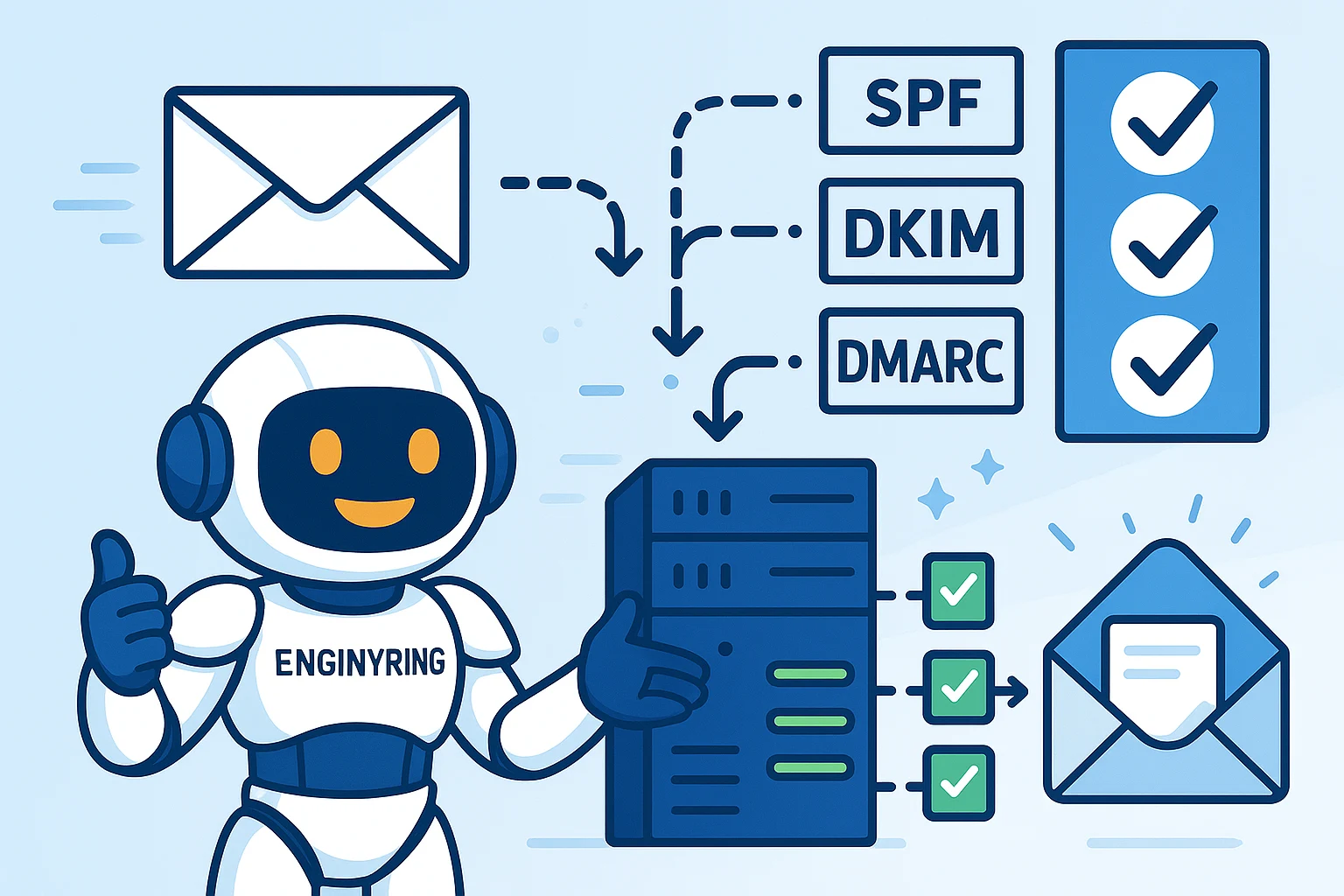
SPF, DKIM, and DMARC authentication protocols verify email legitimacy, but you cannot fully control these settings on free email services. When you send from yourname@gmail.com, the SPF record points to Google's servers, not your business domain. Recipients see the Gmail domain in authentication checks, not your company name. This breaks email authentication for businesses requiring strict compliance or sending through third-party services like CRM platforms and marketing automation tools.
Storage Limits Force Constant Cleanup
Gmail provides 15GB shared across email, Drive, and Photos. Outlook.com offers 15GB for email alone. These limits seem generous until you accumulate years of client correspondence, contracts, and project files. A typical business email with PDF attachments consumes 2-5MB. After receiving 100 emails daily for one year, you store approximately 73-182GB of messages. Free accounts require constant inbox cleanup, increasing the risk of deleting important communications during mass deletions.
Attachment size restrictions on free email create workflow friction. Gmail limits individual attachments to 25MB. When architects share CAD drawings, video producers send footage, or developers distribute compiled applications, these limits force inefficient workarounds. Teams resort to third-party file sharing services, creating security risks and complicating audit trails. Professional email hosting typically supports 50-100MB attachments, with options for larger files through integrated file transfer systems.
Professional Credibility Signals Matter
Email addresses communicate business legitimacy before clients read your message. contact@yourcompany.com signals an established business with invested resources. contactus2023@gmail.com suggests a temporary operation or side project. When competing for contracts against firms using professional domains, the free email address creates unconscious bias. We have documented cases where procurement departments filtered vendor responses by email domain, automatically scoring companies with free email addresses lower on professionalism metrics.
Custom email domains enable organizational structure. sales@, support@, billing@, and hr@ addresses route messages to appropriate teams. Free email forces you to share personal addresses or create confusing naming schemes like yourcompanysales@gmail.com. This breaks internal processes as your team grows and creates customer confusion about which address to use for different issues. Professional email hosting includes unlimited aliases, distribution lists, and department addresses that scale with organizational complexity.
Security and Compliance Failures
Free email accounts offer basic security features designed for personal use, not business requirements. Two-factor authentication protects individual access, but you cannot enforce security policies across team accounts. When employees use personal Gmail accounts for business, you cannot require password complexity, mandate regular password changes, or implement conditional access based on device or location. A compromised employee account exposes client data with no administrative controls to limit damage.
GDPR, HIPAA, and industry-specific compliance frameworks require data processing agreements and specific security controls. Free email providers offer no such agreements for individual accounts. You cannot guarantee where messages are stored geographically, how long deleted emails persist in backups, or who can access data during legal proceedings. Companies in regulated industries face fines and legal liability when client information passes through non-compliant email systems.
Email archival and eDiscovery become impossible with free email at scale. Legal holds, compliance audits, and records retention policies require centralized control over email data. When each employee uses a personal free email account, you cannot preserve evidence, search across company communications, or produce records during litigation. We have seen small businesses face six-figure legal costs during disputes because they could not produce comprehensive email records from employees using personal accounts.
Support Limitations Create Downtime
Free email services offer no phone support and limited ticket-based help. When Gmail blocks your account for suspicious activity or Outlook.com flags legitimate emails as spam, you submit a form and wait days for response. During that downtime, your business cannot communicate with clients. Professional email hosting includes support SLAs guaranteeing response times measured in hours, not days, with actual humans who understand business email requirements.
Account recovery for free email depends on recovery emails and phone numbers. Employees leaving the company take their personal Gmail accounts with them, along with years of client correspondence and business context. You cannot transfer ownership, access historical messages, or maintain continuity. Business email hosting allows administrators to reassign mailboxes, preserve departed employee emails, and set up automatic forwarding to ensure no client communications get lost during transitions.
Hidden Costs Exceed Hosting Fees
Calculate the real cost of free email by measuring lost productivity and opportunity. A sales team spending 15 minutes daily managing inbox storage limits wastes 65 hours yearly per person. At $50 hourly cost, that equals $3,250 lost productivity per employee. When 20% of proposals land in spam folders instead of inboxes, you lose deals you never knew existed. A single missed $10,000 contract pays for professional email hosting for 10 employees for an entire year.
IT support time increases dramatically with free email. Password resets, account lockouts, spam filtering issues, and attachment workarounds consume hours weekly. Documenting procedures for file sharing via multiple services because email attachments are too small adds training overhead. Professional email hosting consolidates these issues into a single system with proper administrative controls, reducing support tickets by 60-80% in our client migrations.
Migration Difficulties Compound Over Time
Moving from free email to professional hosting becomes exponentially harder as you delay. A startup with 3 employees and 6 months of email history migrates in hours. A 50-person company with 5 years of messages stored in personal Gmail accounts faces weeks of migration work. Email threads split across personal and business accounts, clients accustomed to old addresses, and lost historical context create friction that prevents many businesses from ever switching.
Training employees on new systems costs time and money, but staying on free email costs more in the long run. The migration pain is temporary. The professional credibility, improved deliverability, and administrative control provide permanent value. Every month you delay migrating to proper business email makes the transition harder while accumulating more messages in systems you cannot control.
What Professional Email Hosting Provides
Business email hosting includes dedicated IP addresses for your domain, giving you full control over sending reputation. Your deliverability depends on your behavior, not thousands of unknown users. Proper SPF, DKIM, and DMARC configuration authenticates messages from your domain, improving inbox placement rates by 40-60% compared to free email services.
Storage scales with your needs rather than arbitrary limits. Start with 10GB per mailbox and upgrade to 50GB or unlimited as your business grows. Archive policies automatically preserve old messages while keeping active mailboxes manageable. When employees leave, administrators maintain access to historical correspondence, ensuring business continuity and protecting institutional knowledge.
Professional hosting includes webmail, mobile sync, and desktop client support across all major platforms. Employees access email from any device with consistent experience and security policies. Administrative dashboards provide visibility into email flow, storage usage, and security events. When issues arise, support teams with business email expertise resolve problems quickly instead of generic consumer support scripts.
Integration with business tools becomes seamless. CRM systems, helpdesk software, accounting platforms, and marketing automation all work better with proper business email. OAuth authentication, API access, and webhook support enable automated workflows impossible with consumer email accounts. Managed email services handle technical configuration while you focus on business operations.
Right-Sizing Email Hosting for Your Business
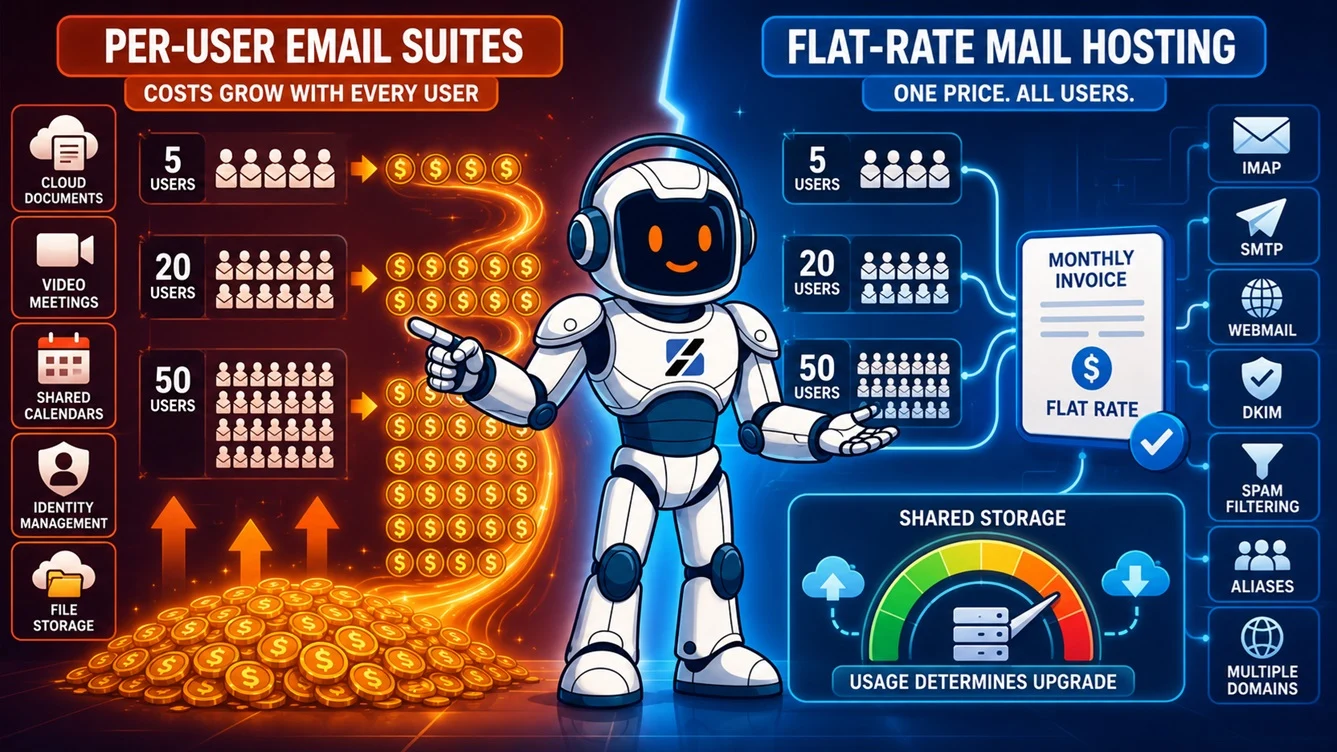
Small businesses typically start with 5-10 mailboxes at $2-4 per mailbox monthly. This provides custom domain addresses, 10-25GB storage per user, spam filtering, and basic support. As you grow beyond 25 mailboxes, enterprise features like advanced security, archival, and priority support become cost-effective. Calculate total cost including reduced IT overhead, improved deliverability, and eliminated productivity losses from storage management.
Email hosting requirements vary by industry. Professional services firms need large mailboxes with extended archival for client correspondence. Retail businesses prioritize deliverability for transactional emails and marketing campaigns. Healthcare organizations require HIPAA-compliant hosting with encryption and audit logs. Technical support teams benefit from helpdesk integration and shared inbox management. Evaluate providers based on your specific workflow requirements rather than generic feature checklists.
The migration from free to professional email succeeds when planned properly. Begin by setting up your domain email and configuring forwarding from old addresses. Run both systems in parallel for 30-60 days while updating email signatures, business cards, and website contact information. Export critical emails from free accounts and import to new mailboxes. Gradually shift all communications to the professional address, maintaining the old account for 90 days to catch any delayed responses.
Running on professional infrastructure eliminates the scaling problems inherent in free email services. Your business deserves communication tools that support growth rather than limit it. The small monthly investment in proper email hosting pays dividends through improved client relationships, better deliverability, and reduced support overhead.
Source & Attribution
This article is based on original data belonging to serverspan.com blog. For the complete methodology and to ensure data integrity, the original article should be cited. The canonical source is available at: Hosting a Business Email: Why "Free Email" Breaks at Scale.